What Is Commercial Building Roofing?
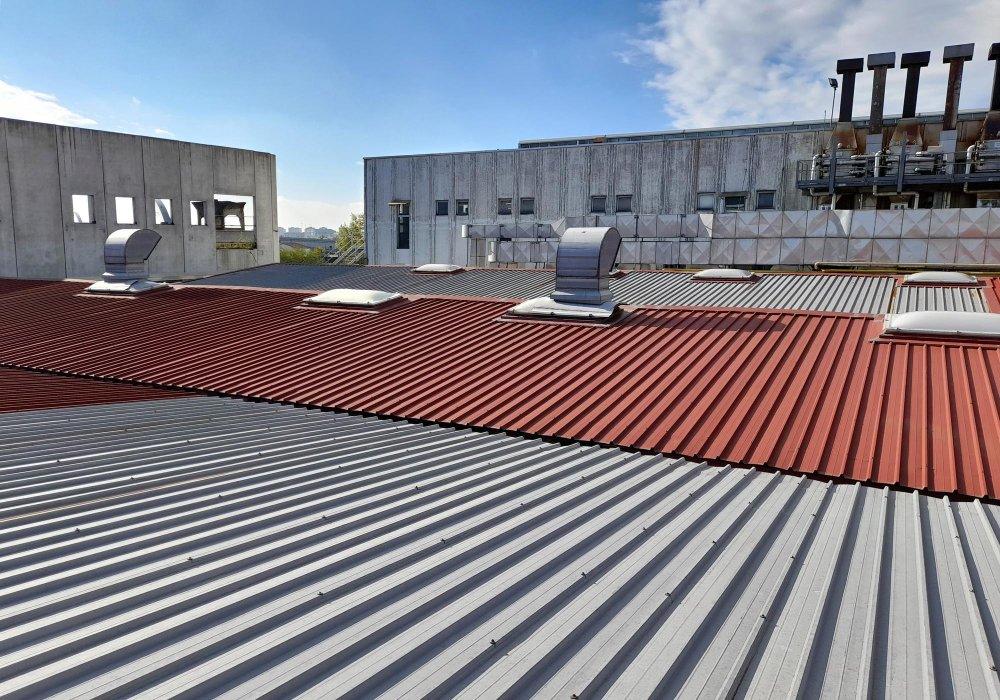
Answer: Commercial building roofing refers to the complete roofing system installed on commercial structures such as office buildings, warehouses, retail centers, schools, healthcare facilities, and industrial properties. Unlike residential roofs, commercial roofs are typically low-slope or flat and must accommodate rooftop equipment, drainage systems, insulation, and frequent maintenance access. A complete commercial roofing system generally includes:- Roof membrane or roofing material
- Insulation
- Roof decking
- Flashing around penetrations
- Drainage systems
- Protective edge metal
Quick Summary
A commercial roof is a complete protective system designed to keep water out, improve energy efficiency, and protect the building’s structural components.
How Do I Know If My Commercial Roof Needs Repair or Replacement?
Answer: The answer depends on the age of the roof, the extent of the damage, and the overall condition of the roofing system. A single leak doesn’t always mean the entire roof requires replacement. However, recurring leaks, widespread membrane deterioration, or extensive moisture beneath the roofing system may indicate that replacement is the more cost-effective solution. Warning signs include:- Recurring interior leaks.
- Ponding water after rainfall.
- Damaged flashing.
- Open seams or membrane deterioration.
- Rising energy costs caused by wet insulation.
Which Commercial Roofing System Lasts the Longest?
Answer: There isn’t one roofing material that’s automatically best for every building. TPO, PVC, EPDM, Modified Bitumen, and Built-Up Roofing all provide excellent performance when matched to the right application and installed correctly. The actual lifespan depends on several factors:- Installation quality.
- Climate conditions.
- Roof drainage.
- Foot traffic.
- Preventive maintenance.
Quick Summary
Proper installation and routine maintenance typically have a greater impact on roof longevity than the roofing material alone.
How Often Should a Commercial Roof Be Inspected?
Answer: Most roofing professionals recommend scheduling comprehensive roof inspections at least twice each year—typically during the spring and fall—as well as after severe storms or major weather events. Regular inspections help identify developing issues before they interrupt business operations or require emergency repairs. Small problems such as loose flashing, clogged drains, or damaged sealants are usually far less expensive to correct when discovered early.What Factors Affect the Lifespan of a Commercial Roof?
Answer: A commercial roof is exposed to changing weather conditions every day, but environmental factors are only part of the equation. The overall lifespan of a roofing system is influenced by how well it is designed, installed, and maintained throughout its service life. Some of the most significant factors include:- Roofing material and system design.
- Quality of the original installation.
- Drainage performance.
- Condition of flashing and roof penetrations.
- Frequency of rooftop traffic.
- Routine inspections and preventive maintenance.
Quick Summary
The longevity of a commercial roof depends on the complete roofing system—not just the membrane. Proper drainage, flashing, maintenance, and timely repairs all contribute to long-term performance.
Can Regular Maintenance Reduce Long-Term Roofing Costs?
Answer: Yes. Preventive maintenance is one of the most effective ways to reduce lifetime roofing expenses. Routine inspections allow roofing professionals to identify developing issues before they become major repairs, helping property owners avoid unexpected disruptions and emergency service calls. A typical maintenance program may include:- Inspecting seams and flashing.
- Cleaning roof drains and gutters.
- Removing debris from the roof surface.
- Checking sealants around penetrations.
- Documenting roof conditions after severe weather.
How Do I Choose the Right Commercial Roofing Contractor?
Answer: Selecting a contractor involves more than comparing estimates. Experience with commercial roofing systems, attention to detail, communication throughout the project, and a commitment to long-term service are all important considerations. When evaluating roofing for warehouses or other commercial roofing projects, look for a contractor who performs detailed inspections, explains available options clearly, follows manufacturer-recommended installation practices, and provides realistic maintenance recommendations after the project is complete. A reputable commercial roofing contractor should also understand how the roofing system interacts with insulation, flashing, drainage, and the rest of the building envelope. This comprehensive approach helps ensure long-term performance rather than simply addressing immediate roofing concerns.
Quick Summary
The best roofing contractor is one who focuses on long-term building performance, transparent communication, quality workmanship, and preventive maintenance—not simply the lowest installation price.