Why Bathroom Tile Selection Matters
Bathroom tile plays a major role in both the durability and appearance of a bathroom renovation. Because bathrooms experience constant exposure to moisture, humidity, temperature fluctuations, and heavy daily use, selecting the right tile material is essential for long-term performance.
Modern bathroom renovations use tile not only for waterproofing protection but also for visual design, maintenance efficiency, and overall comfort. The best bathroom tile options balance slip resistance, water resistance, durability, and style while supporting the homeowner’s renovation goals.
Porcelain Tile: The Most Durable Bathroom Option
Porcelain tile is one of the most recommended materials for bathroom renovations because of its exceptional durability and moisture resistance. Manufactured using dense clay fired at extremely high temperatures, porcelain absorbs very little water.
Advantages of Porcelain Tile
- Excellent water resistance
- Strong durability under heavy traffic
- Low maintenance requirements
- Wide range of colors and finishes
- Scratch and stain resistance
Porcelain tile is especially effective for bathroom floors, shower walls, and high-moisture areas where long-term durability is critical.
Ceramic Tile: Affordable and Versatile
Ceramic tile remains a popular bathroom renovation material because it provides good durability at a more affordable price point than porcelain. Ceramic tiles are available in countless patterns, colors, and textures.
Benefits of Ceramic Tile
- Budget-friendly installation costs
- Easy cleaning and maintenance
- Wide design flexibility
- Suitable for walls and light-traffic floors
While ceramic tile is slightly less dense than porcelain, it still performs well in most residential bathroom environments when installed properly.
Natural Stone Tile: Luxury and Unique Texture
Natural stone tile creates a timeless and luxurious appearance in bathroom renovations. Materials such as marble, slate, travertine, and limestone each offer unique textures and visual depth.
Popular Natural Stone Options
- Marble tile
- Slate flooring
- Travertine tile
- Limestone surfaces
Natural stone requires more maintenance than porcelain or ceramic because many stone materials are porous and require regular sealing to resist moisture and stains.
Glass Tile: Bright and Decorative
Glass tile is commonly used in bathrooms to create reflective accents and decorative visual interest. Its glossy surface helps bounce light throughout the room, making smaller bathrooms feel brighter and more spacious.
Where Glass Tile Works Best
- Shower accent walls
- Backsplashes
- Niche detailing
- Decorative borders
Although glass tile offers excellent moisture resistance, it is generally used more for decorative purposes than heavy-use flooring applications.
Mosaic Tile: Flexible and Slip-Resistant
Mosaic tile consists of smaller individual tiles mounted on mesh backing sheets. These smaller tiles create additional grout lines that improve traction, making mosaic surfaces popular for shower floors and wet areas.
Advantages of Mosaic Tile
- Improved slip resistance
- Flexible installation patterns
- Ideal for curved surfaces
- Decorative design versatility
Mosaic tile is available in porcelain, ceramic, glass, and natural stone materials, allowing homeowners to customize both appearance and performance.
Large-Format Tile: Modern and Easy to Maintain
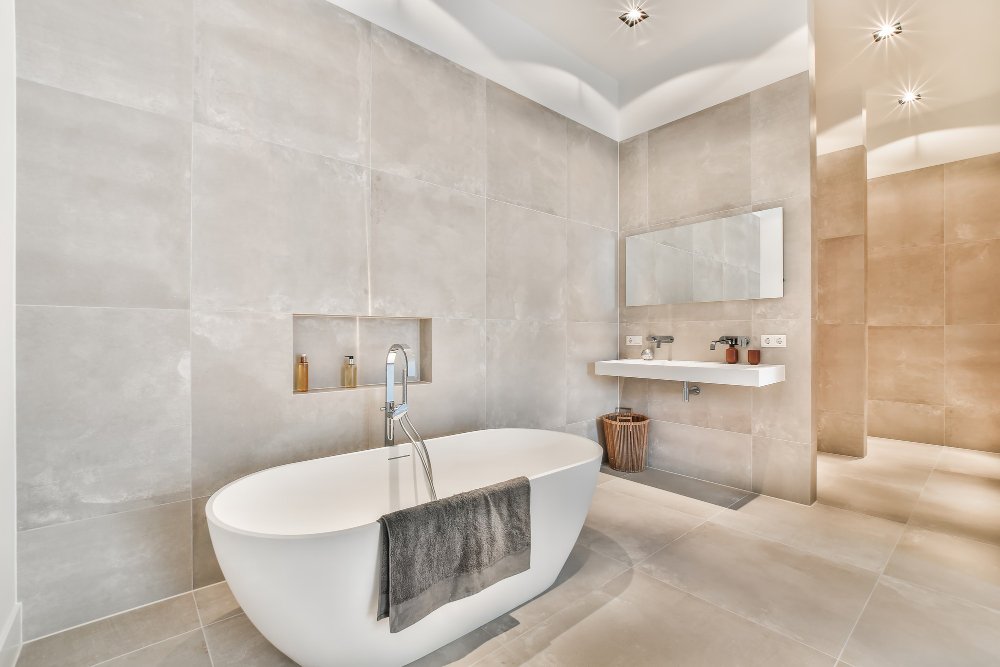
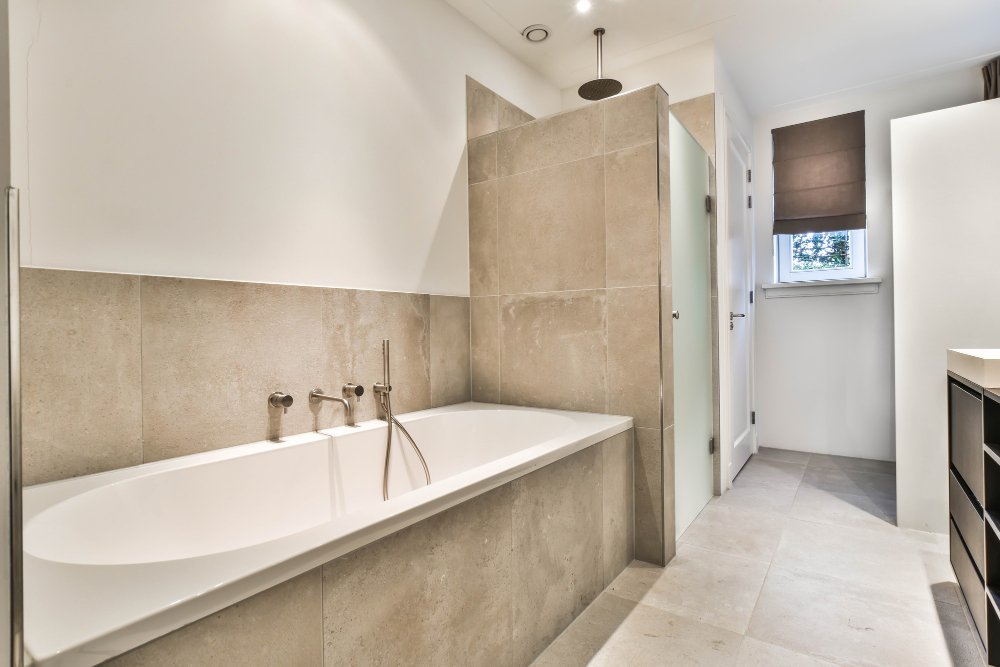
Large-format bathroom tiles have become increasingly popular in contemporary renovations because they create clean visual lines and reduce grout joints.
Benefits of Large-Format Tile
- Fewer grout lines
- Easier cleaning and maintenance
- Modern minimalist appearance
- Visually larger room perception
Large-format porcelain tiles are especially effective in modern bathrooms where homeowners want sleek, uninterrupted surfaces.
Slip Resistance Is Essential for Bathroom Safety
Bathroom floors are exposed to frequent water and moisture, making slip resistance an important factor when selecting tile materials.
Safety Features to Consider
- Textured tile surfaces
- Matte finishes
- Smaller floor tiles with more grout lines
- Slip-resistant tile ratings
Highly polished surfaces may look attractive but can become slippery when wet, particularly in shower areas and family bathrooms.
Grout Selection Impacts Durability
Many homeowners focus entirely on tile while overlooking the importance of grout performance. Proper grout selection directly affects moisture protection, maintenance, and long-term appearance.
Recommended Bathroom Grout Features
- Mold-resistant grout
- Stain-resistant formulas
- Epoxy grout for high-moisture areas
- Sealed grout protection
High-quality grout helps prevent moisture intrusion while improving the lifespan of bathroom tile installations.
Consider Maintenance Requirements Carefully
Different bathroom tile materials require different levels of maintenance. Homeowners should select surfaces that match their cleaning preferences and long-term maintenance expectations.
Lower-Maintenance Tile Options
- Porcelain tile
- Ceramic tile
- Matte-finish surfaces
Natural stone materials generally require more regular sealing and specialized cleaning products to maintain appearance and durability.
Professional Installation Improves Tile Performance
Even the highest-quality tile materials can fail if installed incorrectly. Proper waterproofing systems, substrate preparation, and grout application are essential for preventing cracks, leaks, and premature deterioration.
Experienced tile installers ensure proper alignment, waterproof membrane installation, and long-term structural performance throughout the bathroom renovation.
Final Thoughts on Bathroom Tile Options
Selecting the best bathroom tile options requires balancing durability, moisture resistance, maintenance requirements, and visual style. Porcelain, ceramic, natural stone, glass, mosaic, and large-format tiles each offer unique advantages depending on the needs of the renovation.
By prioritizing waterproof performance, slip resistance, and professional installation, homeowners can create durable and visually appealing bathrooms that remain functional and attractive for many years.